Knee Implants

Project Overview
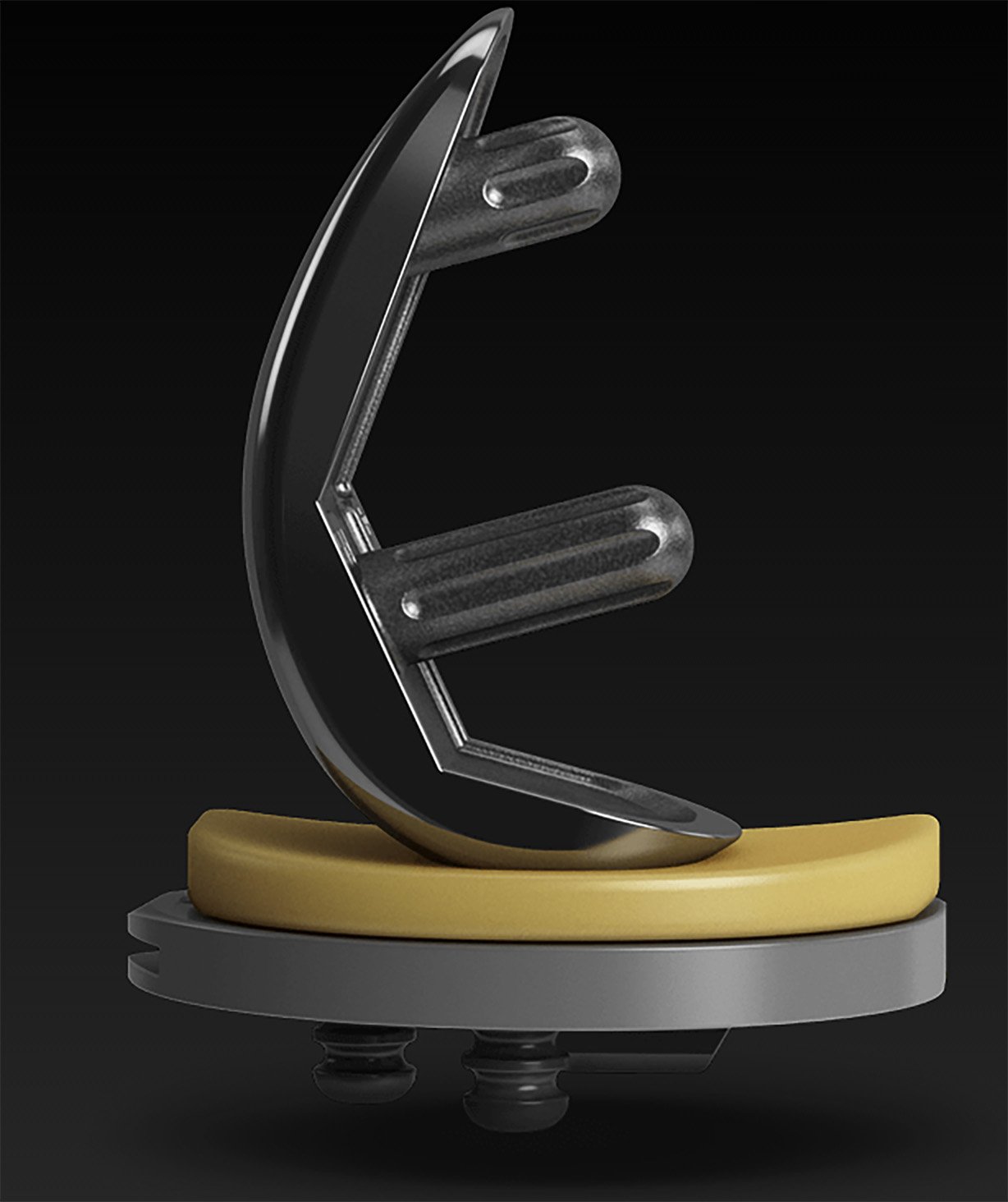
Case: Unicompartmental Knee Arthroplasty (UKA or UNI) treats knee damage limited to a single compartment. Compared to total knee replacement, UNI procedures use smaller incisions and disturb less tissue. As a result, patients recover faster. However, implant performance depends heavily on how naturally the knee articulates through its full range of motion. For this reason, the client partnered with Tri-Power Design to develop a new UNI implant system.
Solution: First, Tri-Power Design analyzed competing UNI systems and studied articulating surfaces using anatomical scan data. Next, the team presented findings to surgeons and gathered direct clinical feedback. Throughout development, engineers focused on maintaining consistent surface contact between femoral and tibial implants. Ultimately, the final design uses an anthropometric geometry that supports unconstrained articulation, preserves bone, and minimizes implant overhang.
Design Challenges: While the design needed to perform across many bone sizes, the team also limited the number of implant sets. Based on a comprehensive bone database and surgeon input, engineers created six implant sizes. In addition, they defined implant geometry using a composite curve with four radii. Later, the team refined anterior and posterior features using anatomical data. Finally, engineers adjusted distal and posterior condyle lengths to ensure proper under-capping. As a result, all six sizes deliver consistent articulation.
Call 973.227.8214 or email us today to learn more about the DJO Uni Implants.